
In 2026, Will the Side Hustle Scale in Popularity?
The Side Hustle may become the operating system of the Modern Worker


For more than a decade, the Side Hustle has symbolized something quintessentially modern: ambition, autonomy, and the hope that a little extra work might unlock a better life.
But as we move toward 2026, the question is no longer whether people hustle on the side, it’s whether the Side Hustle trend continues to scale.
The answer depends on the collision of economics, technology, and culture. And right now, that collision is accelerating.
Economic Reality: The Pressure Cooker Is Still On
Despite cooling inflation and a resilient labor market, the vast majority of Americans are financially squeezed. Housing costs remain historically high, consumer debt is rising, and wages, while growing, haven’t kept pace with lifestyle expectations.
Millions of impacted workers are searching for income buffers.
Side Hustles, once optional, have emerged as an income stabilizer. And unless the economy shifts dramatically positive during the next 18 months, the demand for Side Hustled supplemental income is likely to scale.
Many have turned to the Side Hustles for breathing room.
Technology: Agentic AI is Expanding the Gig Frontier
If the 2010s were the era of Uber and Etsy, the 2020s inform the Era of AI-Enabled Micro-Enterprises.
Agentic AI tools now allow one person to:
✅ Produce professional-grade creative output
✅ Automate their time-sucking administrative tasks
✅ Operate as sole proprietors and avoid the cost of hiring other people
✅ Generate income from digital products
✅ Run niche online businesses without needing high technical skill
AI isn’t eliminating the Side Hustle, it’s multiplying the options.
Most critically, AI levels the playing field between expertise and experimentation.
Workers from all backgrounds may ably test new business ideas with lower development costs and dramatically faster iteration. In short: AI makes side hustles more accessible and scalable.
Culture: Hustle is No Longer a Dirty Word
After the backlash against Hustle Culture earlier in the decade, something interesting happened. Side hustling didn’t fade, it evolved.
And its tone shifted from grind to agency.
Today’s workers are no longer trying to work themselves to the bone; they’re trying to create options:
✅ Professional identity beyond the traditional work day
✅ Diversified income streams
✅ Personal creative outlets
✅ Entrepreneurial experiments without quitting their day jobs
This cultural reframing means the side hustle isn’t just a response to economic need, it’s increasingly a lifestyle choice.
The Corporate Shift: Employers Are (Gradually) Embracing Side Hustle Culture
More employers recognize a truth that they can’t ignore: workers with Side Hustles are often more fulfilled, more skilled, and more loyal to their companies than workers without Side Hustle opportunities.
And while Apple contractually requires their employees to focus 100 percent of their time on their jobs, Etsy enthusiastically encourages its people to do Side Hustles; for Etsy it is actually part of their business model.
As the new year advances, we are likely to see:
✅ A rising number of companies relaxing their moonlighting restrictions
✅ More HR policies clearly outlining permissible outside work
✅ Side Hustles recognized as an important component of one’s professional development
✅ Dual-track career models emerging, where employees balance their salaried work with sanctioned freelance or entrepreneurial activity
And this we expect to see as a new-hire incentive: forward-thinking organizations offering internal side gigs which allow their employees to earn more or develop new skills.
A New Form of Labor Flexibility Is Emerging
Hybrid work and flexible schedules make Side Hustles increasingly viable. Benefitting workers may shift between roles, projects, and income streams with ease.
Such work fluidity is already reshaping the labor landscape:
✅ Traditional full-time jobs are becoming less central to identity
✅ Project-based work is rising
✅ Workers expect to operate in multiple lanes simultaneously
By 2026, more people will view themselves not as employees-plus-a-side-gig, but as Portfolio Workers—individuals managing a blend of varied income streams and experiences.
So… Will the Side Hustle Keep Scaling?
In 2026, the probability is exceedingly high. Side Hustles will be evolutionary, not repetitive, and:
✅ AI-powered
✅ Flexible
✅ Normalized
✅ Skill-building
✅ Attractive to careerists from all the current active workplace cohorts, Late Boomers to Gen Z, and
✅ Fully aligned to one’s work fit where work becomes a wonderful part of the day doing other wonderful things.
What emerged as a way to make ends meet is becoming the new operating system for how millions of people work, learn, and earn.
In 2026, the Side Hustle won’t just scale, it will become THE defining feature of the modern worker.
When, all workplace stakeholders fully embrace the life changing aspects of the Side Hustle, our best days lie ahead.
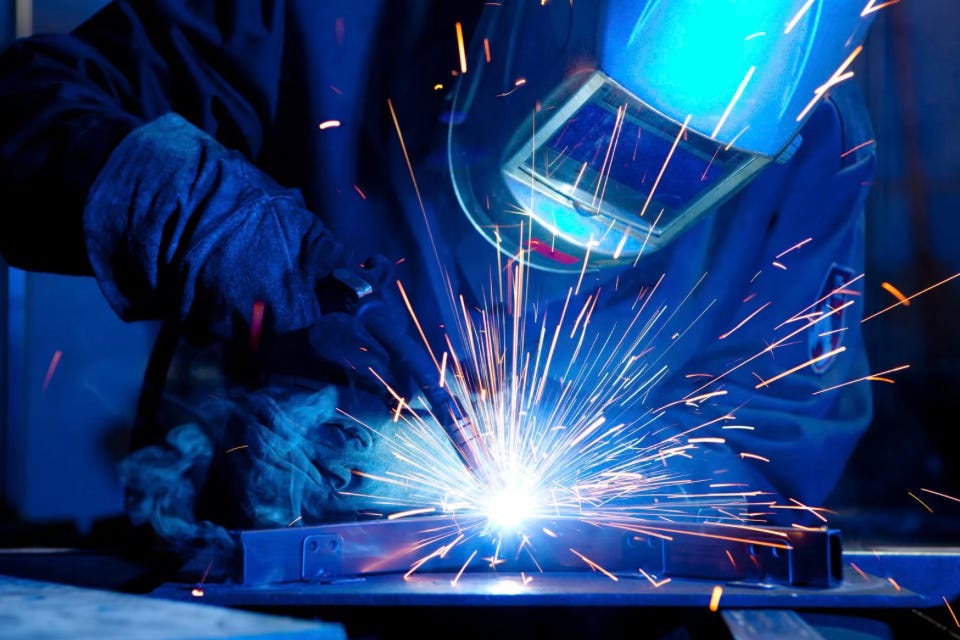
Image credits: Clothing sellers image rendered on ChatGPT 5 based on our prompts; Welder, Canva.
I’m Dan Smolen. As host and executive producer of What’s Your Work Fit? I help you make your work and workplace decisions result in better and more satisfying professional experiences and outcomes. I am also a Founding Member of The Future of Work Alliance.
Your recent reflections on time and connection remind me of the delicate dance of nature—how each moment unfolds like petals in bloom.
Very interesting perspective on what employers should do to revert side hustle (perceived) risks into (development and retention) opportunities